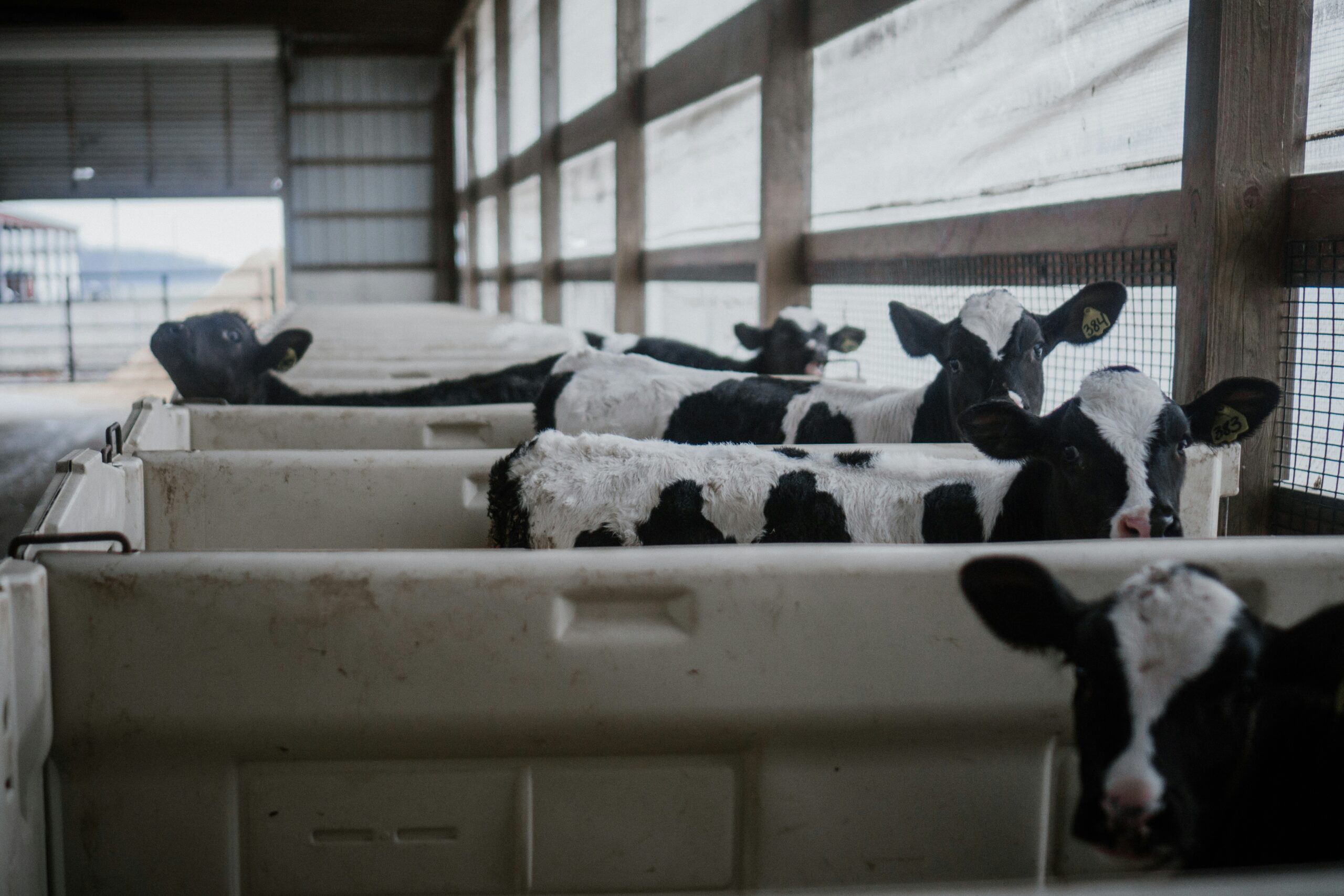
A public-facing statement associated with Harvard Law School’s animal law programming asserts that the initiative is “trying to prove that better animal welfare is good for everyone.” Framed as a broad impact proposition, the claim suggests that improvements in animal welfare may generate benefits across multiple affected populations. The statement is analytically significant because it links several domains—animal wellbeing, human health, environmental sustainability, legal reform, and institutional advocacy—through a single generalized proposition. The analytical question is whether the claim, as presented, provides enough information to understand what “better animal welfare” means, who is included in “everyone,” what counts as “good,” and how the asserted relationship would be measured.
This review applies the Zero Baseline Model, or ZBM, as an analytical framework, not as a legal standard. ZBM evaluates whether a public impact claim can be independently interpreted by identifying the baseline, comparator, measured outcome, method, and material limits of the claim. It does not determine legal liability, regulatory violation, or institutional intent. Its function is to assess whether the claim supplies enough information for an outside reader to understand what the claim means and what it does not mean.
At the level of baseline and comparator, the claim operates against an implied reference point: existing institutional, legal, and policy conditions governing animal treatment. The comparator is not defined. It is not presented as a specific counterfactual, such as no intervention, a measurable alternative policy regime, a defined animal welfare standard, or a particular ecological or public-health benchmark. Instead, the statement relies on a broad contrast between current conditions and an undefined state of “better” animal welfare.
That information gap matters because “better animal welfare” can refer to many different types of change. It could mean reduced suffering, improved confinement conditions, stronger legal protections, reduced use of animals in certain systems, improved public-health outcomes, more sustainable production practices, or a broader rights-oriented shift. Each of those interpretations would require a different baseline, comparator, and method of evaluation. Without specifying the relevant baseline and comparator, the claim cannot be independently assessed as a measurable outcome.
The materials linked to the claim describe a range of programmatic activities, including clinical education, litigation, policy advocacy, and interdisciplinary research initiatives. These activities address issues such as cephalopod protections, factory farming, zoonotic disease risk, and wildlife management. These are substantive areas of work. However, they are primarily outputs or institutional activities. The claim that better animal welfare is “good for everyone” goes beyond the existence of these activities and suggests a broader outcome across populations and systems. The public-facing materials do not appear to provide a metric of “good,” a defined beneficiary population, a causal model, or an aggregation method that would connect the listed activities to a universal benefit conclusion.
The phrase “good for everyone” creates a separate interpretive challenge. “Everyone” could mean all humans, all animals, all affected communities, all stakeholders in the food system, all future generations, or some combination of human and non-human populations. The claim does not define the population included in the term. It also does not explain how benefits and burdens would be distributed across those groups. Animal welfare interventions can produce different effects across different populations and time horizons. They may benefit some animals, impose costs or transitions on some human actors, reduce certain public-health risks, or produce ecological consequences that vary by context. The claim does not disclose how these differences are evaluated.
This creates a scope and boundary issue. The statement compresses several distinct evaluative questions into one broad proposition. Whether an intervention is good for animals, good for workers, good for consumers, good for public health, good for ecological systems, and good for future generations are related but not identical questions. A claim of universal benefit requires a way to identify affected groups, measure impacts, account for trade-offs, and explain how competing effects are weighed. The public-facing statement does not provide that structure.
The evidentiary and methodological limitations are also important. The available materials describe programmatic efforts and provide examples of work being done, but they do not present an empirical framework capable of substantiating a universal welfare claim. There is no disclosed study design, outcome measurement system, causal attribution method, or verification pathway through which an independent reviewer could test the proposition that better animal welfare is “good for everyone.” The claim therefore functions more as an institutional thesis or guiding proposition than as a verified public-impact outcome.
That distinction should be made explicit. It is reasonable for an academic program to investigate, argue, or test the proposition that animal welfare improvements may produce broad social benefits. The statement itself uses the phrase “trying to prove,” which signals an ongoing inquiry rather than a completed demonstration. However, because the claim is public-facing and framed around a broad benefit proposition, its interpretability depends on whether the underlying terms and method are clear. As written, the statement does not supply enough information to determine what would count as proof, what evidence would confirm or disconfirm the proposition, or how universal benefit would be measured.
From a ZBM perspective, the claim is best understood as aspirational and programmatic, not independently verifiable as an outcome claim. The concern is not that the animal law work lacks value, or that animal welfare improvements cannot benefit human and ecological systems. The concern is that the public-facing statement does not define the baseline, comparator, population, outcome metrics, time horizon, or methodology needed to evaluate the breadth of the assertion.
The temporal dimension is also undefined. The claim does not specify whether the asserted benefits would be immediate, cumulative, long-term, or contingent on broader systemic change. It does not explain how present effects are weighed against future effects, or how long-term public-health, ecological, or intergenerational consequences would be evaluated. This matters because animal welfare, environmental sustainability, and zoonotic-risk claims often depend heavily on time horizon and system dynamics.
A more interpretable version of the claim would identify the specific animal welfare improvements being evaluated, define the affected populations included in “everyone,” state the baseline conditions being compared, describe the outcome metrics used to assess “good,” and explain how benefits, burdens, trade-offs, and time horizons are measured. It would also distinguish clearly between programmatic activity, research hypothesis, advocacy position, and demonstrated outcome.
In synthesis, the statement may support a narrower claim that Harvard Law School’s animal law programming is exploring whether improved animal welfare can produce broader benefits across legal, public-health, environmental, and social systems. However, the broader proposition that “better animal welfare is good for everyone” is not independently verifiable from the claim as presented. Under the ZBM analytical framework, the claim is best characterized as aspirational and analytically underdefined, rather than a fully substantiated public-impact claim.
This report applies Zero Baseline Method (ZBM), evaluating whether minimum conditions of protection and political equity are met before assessing outcomes. Where these conditions are absent, value claims may reflect what we define as illegal baselining—systems that assign value without ensuring meaningful self-determination, particularly for children entering unequal conditions.
FairStartMovement.org
Visit us on social media: